WordPress GPL Premium Themes and Plugins help site owners understand what GPL allows, how to buy safely, and how to avoid costly confusion while building faster, cleaner websites.
WordPress GPL Premium Themes and Plugins sit at the center of one of the most misunderstood parts of the WordPress ecosystem. The GPL is a free-copyleft license designed to protect freedom to share and change software, not to lock users into a single vendor or price point. WordPress itself is distributed under the GNU GPL, and WordPress.org notes that derivative works such as plugins and themes inherit GPL requirements.
That legal structure matters because people often confuse ownership, support, redistribution, and pricing. WordPress GPL Premium Themes and Plugins can be sold for a fee, but the license still protects the buyer’s freedom to redistribute and modify the software, as long as the GPL terms are respected. That is the core distinction that turns a messy market into a manageable one.
The practical result is simple: if you understand the license, you can choose software more confidently. If you do not understand it, you may overpay, misuse a package, or trust a source that cannot keep your site safe. WordPress GPL Premium Themes and Plugins are therefore not just a licensing topic; they are a decision-making topic tied to budget, trust, and long-term site health.
What the GPL actually means
WordPress GPL Premium Themes and Plugins should be viewed through the idea of freedom, not price. The GNU GPL says users may share and change the software, and the WordPress license page explains that derivative works of WordPress code inherit GPL licensing. That means the license travels with the code, which is why WordPress themes and plugins are expected to remain GPL-compatible.
For site owners, that freedom creates opportunity. WordPress GPL Premium Themes and Plugins can be bought, resold, redistributed, or modified in ways that would be impossible under many proprietary licenses. The key is to understand that “free software” does not always mean zero cost; it means freedom to use, study, share, and adapt. The GNU Project explicitly frames GPL around freedom rather than price.
That nuance matters for anyone building a business site. WordPress GPL Premium Themes and Plugins can reduce upfront spend, but the real value comes from lawful flexibility. If a product’s license is GPL-compatible, you are working inside a recognized open-source model instead of guessing at the rules. WordPress.org’s plugin guidelines also state that plugin code and included assets hosted in the directory must comply with GPL or a GPL-compatible license.
WordPress GPL Legal Truth
The WordPress GPL Legal Truth is not complicated once the sources are read directly. WordPress is GPL-licensed, and WordPress.org says derivative works like plugins and themes inherit GPL requirements. WordPress theme guidance also states that themes in the directory must be GPL-compatible, with GPLv2 or later strongly recommended in the relevant review guidance.
That means the legal conversation is less about “can this be sold?” and more about “what rights travel with the product?” WordPress GPL Premium Themes and Plugins may absolutely be sold for a fee, and WordPress Learn explains that premium versions can exist even though they cannot be sold through the WordPress.org directories. The license allows distribution for a fee while still preserving the buyer’s freedom to redistribute.
It is also important not to overstate what the license does and does not cover. WordPress guidance has long distinguished between PHP code and some presentation assets, while still requiring GPL compatibility for the package overall and for directory inclusion. In practice, that means serious sellers keep their licensing clear, because confusing license terms create distrust very quickly.
GPL vs Nulled
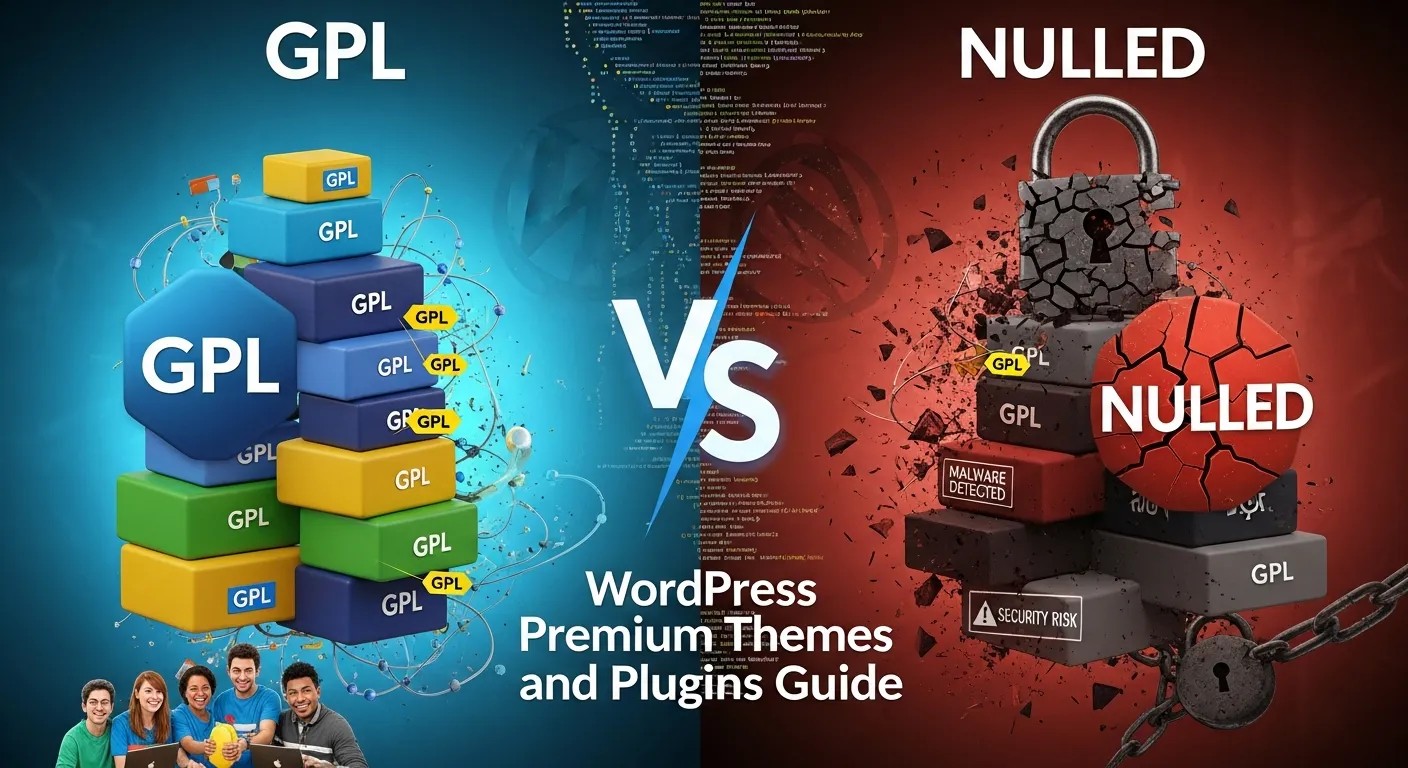
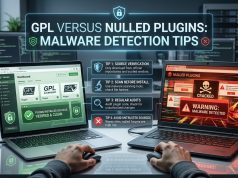
GPL vs Nulled is the comparison that most buyers really need to understand. WordPress GPL Premium Themes and Plugins are licensed software packages with lawful redistribution rights, while nulled copies are typically distributed without the original seller’s support, update channel, or trustworthy provenance. That difference is not just philosophical; it affects safety, maintenance, and confidence. The GPL allows redistribution, but it does not magically certify every copy floating around the web.
In a buyer’s mind, GPL vs Nulled often becomes a question of “cheap versus expensive.” That framing is too shallow. A better question is whether the source is legitimate, whether the package is current, and whether the purchase includes predictable updates and support. WordPress GPL Premium Themes and Plugins can be perfectly legitimate when sourced from reputable vendors, but a nulled file from an unknown host may carry obvious trust problems even when the code itself began as a GPL work.
From a reputation standpoint, GPL vs Nulled matters because trust is fragile. If a site owner installs unverified software, the risk is not just technical. A broken update, a hidden modification, or a missing compatibility fix can damage uptime and the user experience. That is why people researching WordPress GPL Premium Themes and Plugins should focus on source quality, not just headline price.
Why premium versions still exist
A lot of confusion disappears when you understand why WordPress GPL Premium Themes and Plugins can be sold at all. The GPL does not ban commerce. The GNU Project states that free software is about freedom, not price, and that users may charge for copies if they wish. WordPress Learn echoes the same idea by explaining that premium versions may be offered for a fee even though they are not sold through WordPress.org directories.
That is one reason commercial vendors can still build sustainable businesses around WordPress GPL Premium Themes and Plugins. They are not selling freedom itself. They are selling convenience, support, updates, documentation, design quality, integration, and reassurance. Those extras are often what busy site owners are actually paying for.
This is also why some vendors keep their free and paid offerings aligned under GPL-compatible terms. WordPress.org’s commercial support information for themes requires 100% GPL themes and notes that professional support is part of the commercial model. In other words, the market can be open and profitable at the same time.
WordPress GPL Low Cost Site Building
WordPress GPL Low Cost Site Building is one of the biggest reasons people search for this topic. When licenses are GPL-compatible, budget-conscious site owners can reduce startup costs without abandoning flexibility. That matters for freelancers, small businesses, startups, and creators who need a professional website before they have a large operating budget.
WordPress GPL Low Cost Site Building works best when the buyer is selective. The goal is not to collect the cheapest files possible. The goal is to spend less on licensing while still protecting stability, support, and update quality. A good GPL-based purchase can be an efficient business move, while a bad source can become a hidden maintenance problem.
WordPress GPL Low Cost Site Building also has a psychological benefit. When the upfront cost is lower, teams can move faster and test ideas earlier. That encourages experimentation without making every decision feel permanent. For a new site, that flexibility is extremely valuable.
Lesser General Public License
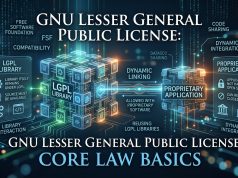
The Lesser General Public License is a separate GNU license family, and the GNU Project describes it as a set of additional permissions added to the GPL in version 3. It is mainly designed for libraries and linked works, not as the default model for typical WordPress theme and plugin buying decisions.
For most buyers, the main point is not to confuse the Lesser General Public License with WordPress licensing. WordPress core is GPL-licensed, and WordPress.org guidance focuses on GPL compatibility for plugins and themes. If a seller talks about the Lesser General Public License, the practical question is whether that license is actually relevant to the product you are evaluating.
That distinction matters because license names can sound similar while serving different purposes. WordPress GPL Premium Themes and Plugins are usually evaluated through GPL compatibility, vendor trust, and update access—not by assuming every free-software license works the same way.
How to judge a source before buying
A careful buyer looks at more than screenshots and feature lists. WordPress GPL Premium Themes and Plugins should come from a source that clearly states the license, explains support terms, and shows a history of updates. If those basics are missing, the risk rises quickly.
A good vendor usually has clear documentation, change logs, support contact details, and an obvious relationship between the free and paid versions. WordPress.org’s commercial theme guidance emphasizes active maintenance and professional support, which is a useful signal even if you are not buying from the directory itself.
You should also look for consistency. If a source says it respects GPL but then adds hidden restrictions that conflict with the license, that is a warning sign. WordPress.org guidance has repeatedly rejected split licensing for WordPress derivatives when the package as a whole is not GPL-compatible.
Why support and updates matter more than hype
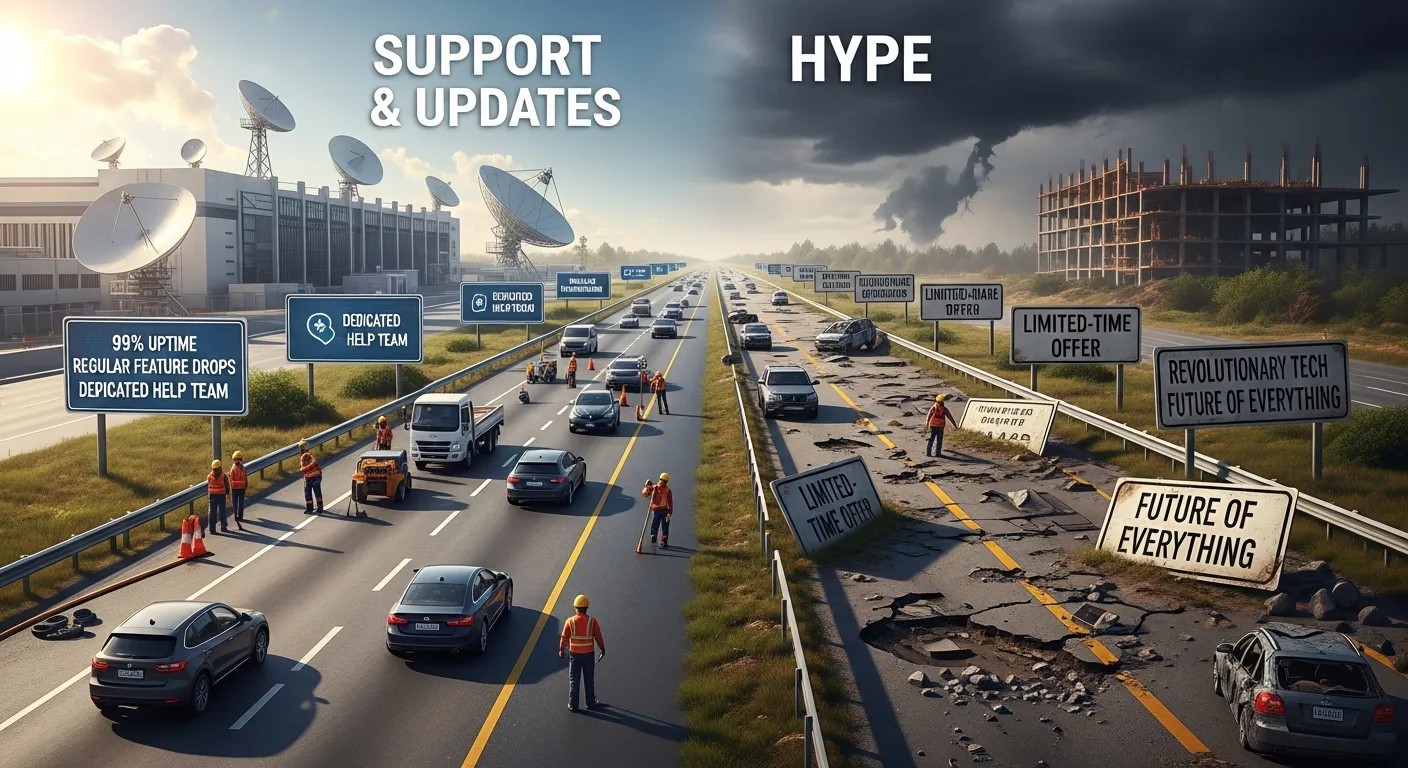
WordPress GPL Premium Themes and Plugins are easiest to value when you think beyond the download. Support keeps the product understandable, and updates keep it compatible with the rest of your stack. A beautiful theme with poor maintenance can create more work than it saves.
That is especially important for people building business sites. Compatibility changes happen over time, and the product you install today must still work after core updates, plugin updates, and design changes later. WordPress GPL Premium Themes and Plugins are not one-time purchases in practice; they are ongoing operational dependencies.
Support also affects confidence. When a feature breaks, a reliable vendor shortens the recovery path. When support is absent, even a perfectly legal GPL copy can become hard to maintain. That is why smart buyers treat support quality as part of the product value.
Security is part of the value
WordPress GPL Premium Themes and Plugins should be judged on security as much as style. If a package is obtained from a source you cannot trust, the possible downside is obvious: stale code, broken compatibility, and hidden modifications that may not be visible at first glance.
This is where a Malware Scanner Plugin becomes useful in the broader workflow. A scanner does not replace good sourcing, but it helps check whether a site has already been exposed to suspicious code or unexpected changes. Used after installation and during regular maintenance, it creates another layer of confidence.
Security and reputation are connected. If a site becomes unstable, users blame the site, not the licensing theory behind it. That is why WordPress GPL Premium Themes and Plugins should always be paired with safe handling, backups, and a clear update routine.
Why cleanup and maintenance belong in the same conversation
WordPress GPL Premium Themes and Plugins are easier to manage when the site itself is tidy. That is where a Database Cleaner Plugin fits in. Old revisions, abandoned data, and leftover plugin tables can slow down admin work and make troubleshooting harder.
A Database Cleaner Plugin helps keep the site lean enough that new theme or plugin changes are easier to evaluate. If the database is cluttered, it becomes harder to tell whether a slowdown comes from the new product, an old setting, or a hidden conflict.
This is where operational discipline matters. WordPress GPL Premium Themes and Plugins should be part of a system that includes backups, scans, staged testing, and cleanup. That way the site remains easier to trust when changes are made.
Relationship to reputation and trust
WordPress GPL Premium Themes and Plugins influence online reputation management more than many site owners realize. A fast, stable, clearly licensed website gives visitors a sense of professionalism. A sloppy, unverified, or poorly supported installation does the opposite.
When licensing is clear, users trust the brand more easily. When updates are reliable, the site feels cared for. When source quality is visible, the entire operation looks more mature. Those impressions matter, especially for agencies, ecommerce brands, and publishers.
That is why WordPress GPL Premium Themes and Plugins should be treated as part of brand governance, not just software shopping. The product choice sends a signal about how the organization handles quality and accountability.
A practical buying framework
The easiest way to buy WordPress GPL Premium Themes and Plugins wisely is to use a simple framework. First, verify that the license is clearly GPL-compatible. Second, check whether the vendor offers updates and support. Third, review whether the product is actively maintained.
After that, judge the design and performance fit. Some products look impressive but add unnecessary weight. Others are minimal and easier to keep stable. WordPress GPL Premium Themes and Plugins should be chosen for the job at hand, not for hype.
Finally, think about the operating cost after purchase. A cheaper product that creates endless maintenance is not really cheap. A better WordPress GPL Premium Themes and Plugins decision is one that lowers friction over time.
Practical use cases
A startup can use WordPress GPL Premium Themes and Plugins to launch faster without overspending on licensing. A freelancer can use them to build more client sites with a reusable workflow. An agency can use them to standardize delivery while still respecting open-source licensing.
A content publisher can use WordPress GPL Premium Themes and Plugins to keep design flexible and changes manageable. A small business can use them to stay professional while keeping the budget under control. The point is not simply to save money. The point is to spend smarter.
That is also why WordPress GPL Premium Themes and Plugins should be paired with a disciplined content and maintenance process. Tools work best when the organization around them is clean, calm, and repeatable.
Where the LGPL comparison helps
If you are reading product documentation and see references to the Lesser General Public License, do not panic. The GNU LGPL exists mainly for libraries and includes additional permissions layered on top of GPLv3. The important thing is to ask how the product is actually licensed and whether that license fits the use case.
For most WordPress buyers, the LGPL question is secondary. WordPress GPL Premium Themes and Plugins are usually a GPL compatibility issue first, and a vendor support issue second. License jargon should never replace practical review.
That is why it helps to keep the discussion simple: confirm the license, confirm support, confirm update access, and confirm fit. If those four things are clean, you are usually in good shape.
A brief compliance mindset
WordPress GPL Premium Themes and Plugins work best when buyers think like operators instead of bargain hunters. The right question is not “Can I get this file?” The right question is “Can I trust this source to help me run the site safely over time?”
That mindset saves money in the long run. It also reduces the chance of rework, lost time, or avoidable cleanup. When source trust, update rhythm, and license clarity line up, your site becomes easier to maintain and easier to defend.
It is also the right mindset for agencies and teams. If everyone understands how WordPress GPL Premium Themes and Plugins fit into a responsible workflow, fewer mistakes slip through the cracks.
Conclusion
WordPress GPL Premium Themes and Plugins are powerful because the GPL gives users freedom, and WordPress itself is built on that same foundation. The legal truth is straightforward: WordPress derivatives inherit GPL expectations, WordPress.org requires GPL-compatible behavior in its directories, and premium products can still be sold for a fee. The smart path is not to chase the cheapest file, but to choose a trustworthy source, verify support and updates, and keep the site clean and secure. When you evaluate WordPress GPL Premium Themes and Plugins that way, you get lower cost, better control, and stronger long-term confidence.
Frequently Asked Questions (FAQs)
Are WordPress GPL Premium Themes and Plugins legal?
Yes, when they are distributed under GPL-compatible terms and sourced honestly. The GPL allows sharing and modification, and WordPress.org says derivative works inherit GPL requirements.
Can WordPress GPL Premium Themes and Plugins be sold for money?
Yes. The GNU GPL allows charging for software, and WordPress Learn notes that premium versions may be offered for a fee even though they are not sold through WordPress.org directories.
What is the difference between GPL and nulled copies?
GPL copies are licensed under terms that permit sharing and modification. Nulled copies are typically redistributed without trustworthy provenance, updates, or support. That is why source quality matters so much.
Is the Lesser General Public License the same as GPL?
No. The Lesser General Public License is a separate GNU license family designed mainly for libraries and includes extra permissions. It is not the default license model people usually mean when discussing WordPress themes and plugins.
Do WordPress.org themes and plugins have to be GPL-compatible?
Yes. WordPress.org plugin guidelines say plugin code and included assets must comply with GPL or a GPL-compatible license, and WordPress theme guidance similarly expects GPL compatibility.
Why do premium versions exist if GPL allows sharing?
Because many buyers pay for support, updates, convenience, and a reliable vendor relationship. The software freedom remains, but the service layer is what many customers are actually buying.
Should I scan GPL downloads for malware?
Yes. A Malware Scanner Plugin is a sensible part of site maintenance because licensing alone does not guarantee a clean or untampered installation.
Should I clean my database after changing themes or plugins?
Yes. A Database Cleaner Plugin can help remove old clutter, but always back up first and test afterward.
How does this affect online reputation management?
Clean licensing, stable updates, and careful maintenance all support trust. A broken or unverified site can damage how users perceive the brand.
What is the safest way to buy WordPress GPL Premium Themes and Plugins?
Buy from a source that clearly states the license, offers updates, and has a visible support and maintenance history. That combination is the best signal of long-term reliability.