GPL vs Nulled is a choice between clean sourcing and hidden risk. This guide explains licensing, security, updates, performance, SEO, and long-term ownership so WordPress users can make safer, smarter decisions.
If you are comparing GPL vs Nulled for a WordPress site, the real question is not only cost. It is whether your website can stay secure, stable, searchable, and easy to maintain over time. Many site owners chase a lower upfront expense, then discover that cheap shortcuts create hidden costs in malware cleanup, broken updates, lost rankings, and damage to brand trust. That is why GPL vs Nulled should never be treated as a simple bargain hunt. It is a risk assessment, a workflow decision, and a reputation decision all at once.
A WordPress site is often a business asset, not a hobby project. That means the software choices behind it matter more than most beginners realize. When people hear GPL vs Nulled, they may assume both options are “cheap versions” of premium products. In reality, the difference is much bigger. One path can align with open licensing and normal maintenance expectations, while the other often sits in a gray or openly unsafe zone that can expose your website to security, legal, and ethical concerns.
This guide gives you a practical way to compare GPL vs Nulled without hype. You will see what the terms mean, where the risks come from, and how to think about long-term ownership. By the end, you will know how to choose a path that protects your content, your visitors, and your search visibility.
What GPL and Nulled Really Mean
When people discuss GPL vs Nulled, they are usually talking about WordPress themes or plugins. WordPress itself is distributed under the GNU General Public License, which allows users to study, modify, and redistribute software under specific conditions. That openness is one reason the ecosystem is so large. But the open license does not automatically make every download safe, trustworthy, or well maintained.
The Lesser General Public License is often mentioned in software conversations, but for most WordPress users the key idea is simpler: licenses determine what you are allowed to do with software, while trust determines whether the copy you found is clean and usable. GPL vs Nulled often gets confused because both may appear outside the official vendor checkout flow. Still, they are not the same thing. A GPL-licensed product can be redistributed legally if the distributor follows the license terms, while nulled software usually means a modified copy with restrictions removed, licensing checks bypassed, or hidden code inserted.
That distinction matters because the outside appearance can be misleading. A file may look like a premium theme, but the package behind the file can be unsafe. In a GPL vs Nulled comparison, the packaging, source, distribution channel, and update pathway are just as important as the file name.
The Core Safety Difference
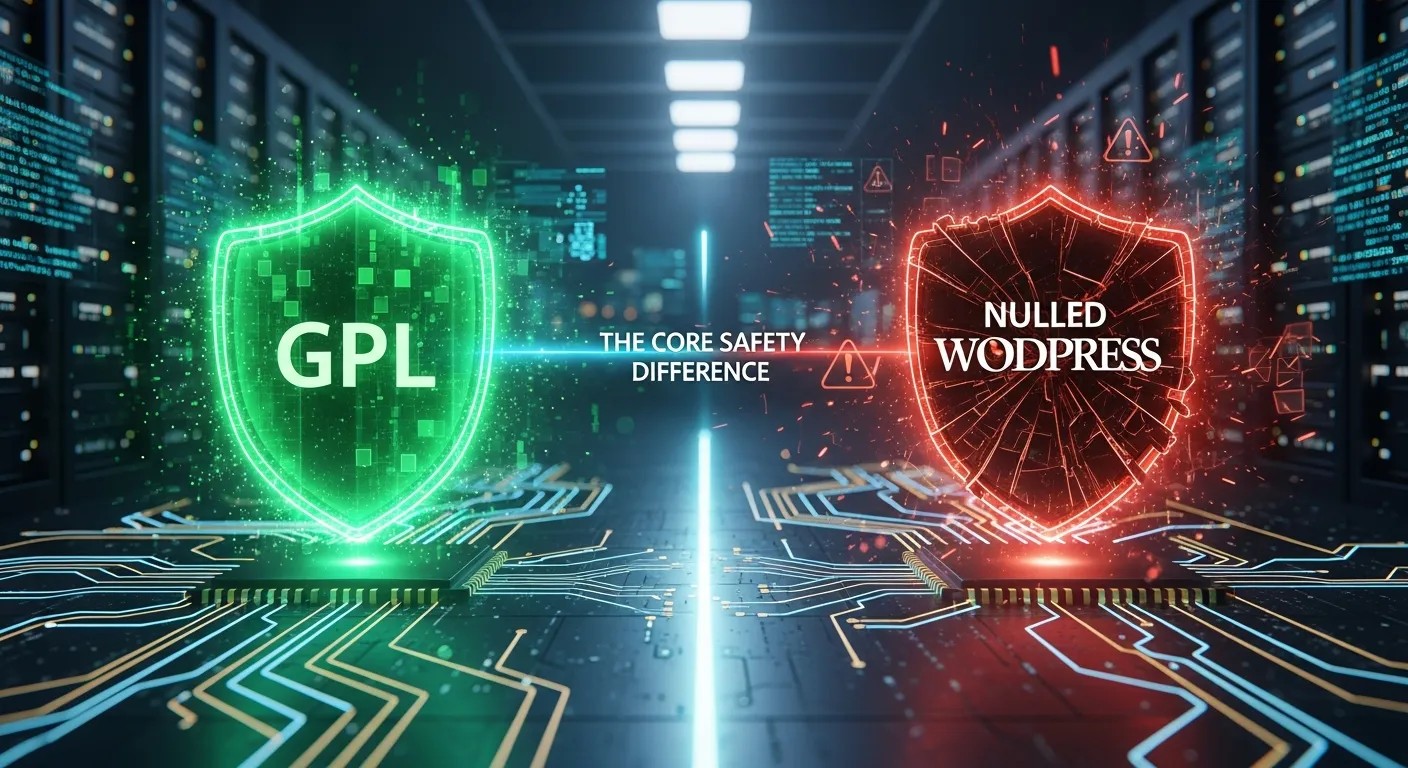
The biggest difference in GPL vs Nulled is trust in the source. A properly distributed GPL copy may still require careful vetting, but it is usually easier to evaluate, audit, and maintain. Nulled software is far more likely to contain malicious code, hidden backdoors, spam links, expired components, or tampered update logic. Once that happens, the cost of “saving money” becomes much higher than buying legitimate software.
In practical terms, GPL vs Nulled is also about support and patching. Premium developers release updates to fix security bugs, improve compatibility, and adapt to WordPress changes. A legitimate license channel usually keeps those updates flowing. With nulled files, you may get an outdated copy that stops working after a WordPress core update, a PHP upgrade, or a change in another plugin. That can break forms, checkout flows, page builders, and even the entire admin dashboard.
There is also a psychological effect. Many site owners feel relief when they avoid a purchase at first. But GPL vs Nulled often reverses that emotion later. What felt like a smart bargain can become anxiety: every login, every update, and every plugin conflict starts to feel risky. That stress is part of the real cost.
Security Risks You Cannot Ignore
Security is the strongest argument in the GPL vs Nulled debate. When software is altered by an unknown party, you lose visibility into what changed. That means a nulled package can hide malicious scripts, remote access code, phishing redirects, or crypto-mining logic. Because the changes are designed to evade detection, the damage may remain invisible for weeks or months.
Attackers often target WordPress because it powers so many sites. In a GPL vs Nulled setup, the presence of unknown code can create a chain reaction. A compromised plugin can expose admin credentials, inject malicious JavaScript, or allow attackers to upload more files. Then the issue spreads to contact forms, analytics tracking, and customer data. Even if your site looks normal on the front end, the backend may already be compromised.
For this reason, GPL vs Nulled is not just about “is it free?” It is about whether you can defend your site when something goes wrong. Legitimate software from a trusted source gives you a clearer starting point for audits, scans, and incident response. Nulled software takes away that clarity and makes troubleshooting much harder.
Common Hidden Problems in Nulled Files
A nulled package may contain:
- stolen or outdated code,
- hidden links to spam or gambling pages,
- backdoors that allow remote control,
- fake license bypasses that break updates,
- scripts that steal sessions or admin cookies,
- code that loads from unsafe third-party domains.
Each of these problems creates extra work later. In a GPL vs Nulled comparison, the visible price difference is often tiny compared with the cleanup cost after a compromise.
Legal and Ethical Considerations
The GPL vs Nulled debate also has legal and ethical sides. GPL software can generally be redistributed under the license terms, but that does not mean every copy is ethically sourced or complete. A nulled copy often involves bypassing protections, removing author controls, or tampering with code in ways that may violate copyright, contract terms, or acceptable use policies.
For agencies, freelancers, and businesses, that risk matters. If you build client sites with unsafe or unauthorized copies, the liability can extend beyond one website. A client may blame you for downtime, malware, or lost revenue. In that setting, GPL vs Nulled becomes a professional responsibility issue, not just a technical one.
Ethically, there is another layer. Developers spend time maintaining compatibility, fixing bugs, and releasing security updates. When users rely on tampered copies, the product ecosystem loses revenue that funds support and improvements. A healthier approach is to use legitimate channels, open-source alternatives, or GPL distributions that respect the license while still keeping the code clean.
Performance and Stability Issues
A site can be “safe enough” in the malware sense and still be unstable. That is another reason GPL vs Nulled deserves careful thinking. Nulled products are frequently outdated, poorly packaged, or modified by people who do not understand the original code structure. The result can be slower page loads, broken admin screens, PHP notices, JavaScript conflicts, and unreliable integration with other tools.
WordPress performance depends on clean code as much as on hosting. If a theme or plugin introduces excessive scripts, unoptimized queries, or unnecessary assets, your page speed suffers. That hurts user experience and SEO. When visitors wait too long, they leave. When search engines see slow pages or unstable behavior, rankings can drop. So GPL vs Nulled is not only a security issue; it is a performance issue that can directly affect revenue.
This matters especially for sites that depend on conversions. A landing page, checkout flow, booking form, or lead capture funnel should be predictable. A broken script in a nulled package can quietly lower conversion rates long before you notice the root cause. In contrast, a legitimate plugin ecosystem usually gives you clearer documentation, known compatibility, and predictable update behavior.
A Practical Stability Test
Ask these questions in any GPL vs Nulled review:
- Does the product have a reliable update source?
- Can you verify the file integrity?
- Is the code documented and maintainable?
- Will support exist when WordPress updates?
- Can you safely remove or replace the product later?
If the answer is no to several of these, the hidden cost is probably too high.
Why WordPress Users Are Tempted by Cheap Downloads
People rarely choose GPL vs Nulled because they love risk. They choose it because they want speed, savings, and access. A new site owner may need a premium page builder, a form plugin, a cache plugin, or a design toolkit, but the combined cost feels heavy. That is especially true for freelancers, startups, and small businesses trying to launch fast.
This is where the psychology behind GPL vs Nulled becomes important. The low initial cost creates immediate relief. It makes the project look more achievable. But that relief can be temporary if the site later needs cleanup, replacement, or recovery. In many cases, the “cheap” choice only delays the real expense.
There is also the fear of missing out. People see premium demos and want the same results without the price tag. That is why GPL vs Nulled marketing can be persuasive. It promises access without friction. However, the promise ignores the part where website ownership includes maintenance, updates, compatibility, and trust. A site is not only a design asset; it is a living system.
When GPL Can Be a Smart Budget Strategy

Not every budget-conscious option is unsafe. In the GPL vs Nulled conversation, it helps to separate legitimate affordability from hidden compromise. Many businesses look for WordPress GPL Premium Themes and Plugins because they want a lower-cost way to test layouts, build prototypes, or launch smaller projects. That can be reasonable when the source is clean, the distribution is lawful, and the code is not tampered with.
There are also cases where teams use WordPress GPL Low Cost Site Building as part of a careful startup workflow. They may begin with a modest setup, validate the market, and upgrade later. This can be a valid strategy if the tools are legitimate and the team keeps backup, update, and security routines in place. In that scenario, GPL vs Nulled is not really a contest between “free” and “paid.” It is a contest between trustworthy and untrustworthy sourcing.
For many site owners, the sensible path is to mix open-source tools, limited premium purchases, and simple architecture. That reduces cost without taking hidden risks. The goal is not to maximize spending. The goal is to maximize confidence.
How to Evaluate a Plugin or Theme Before You Install It
A smart GPL vs Nulled decision begins before installation. Check the source. Look for the original developer or a reputable distributor. Review the changelog. See whether recent updates are active. Read compatibility notes for your WordPress version, PHP version, and major page builders. If the package came from a random mirror, a forum upload, or a file-sharing site, you should assume extra risk.
You should also inspect the package structure. A clean installation folder should not contain strange executables, obfuscated scripts, or unrelated files. If the licensing screen has been removed or the updater has been modified, that is a major warning sign in any GPL vs Nulled review. Good software does not need secrecy to prove value.
Finally, test in a staging environment first. A staging install lets you watch for fatal errors, layout conflicts, and unusual outbound requests. Even a legitimate tool can break a site if it is incompatible. The advantage of trusted sources is that they make diagnosis much easier.
Red Flags Checklist
In a GPL vs Nulled decision, treat these as danger signs:
- no changelog,
- no author identity,
- no update history,
- unusual obfuscation,
- unexpected outbound traffic,
- missing documentation,
- download links from shady sources,
- hidden affiliate or spam behavior.
If several of these show up, walk away.
The Role of Maintenance Tools
A WordPress site is a system, and systems need care. That is why maintenance tools often come up in GPL vs Nulled discussions. A WordPress Cache Plugin can improve speed, but only if it is reliable and configured correctly. A buggy or tampered caching tool can create stale pages, broken sessions, or login problems. Similarly, a Database Cleaner Plugin can help remove clutter, but careless use can also delete critical data if the tool is low quality or modified.
Maintenance is where the value of clean software becomes obvious. Good tools give predictable behavior, clear settings, and visible support. In a GPL vs Nulled environment, those qualities matter because your maintenance stack affects everything else. One unsafe utility can undo the benefits of your theme, your content, and your SEO work.
This is especially important for busy site owners who assume all plugins are interchangeable. They are not. The difference between a verified build and a tampered copy can be the difference between a smooth site and a recurring emergency.
SEO Impact of Unsafe Software
Search visibility is a major reason people care about GPL vs Nulled. Search engines reward trust, speed, and stability. If a site becomes infected, shows spammy links, or starts injecting unwanted redirects, rankings can fall quickly. Even without a full compromise, performance issues from bad code can lower Core Web Vitals, which affects user experience and organic visibility.
A site damaged by nulled software may also face blacklisting warnings from browsers or security tools. That can reduce traffic, lower conversion rates, and hurt brand confidence. In contrast, legitimate software makes it easier to maintain uptime, keep pages indexable, and avoid unnecessary surprises.
For content sites, ecommerce stores, and lead generation pages, SEO loss is often more expensive than the plugin itself. That is why GPL vs Nulled should be framed as a business decision. Protecting rankings is cheaper than recovering them.
A Simple Decision Framework
When you are deciding between GPL vs Nulled, use a straightforward framework:
- source trust,
- license clarity,
- update availability,
- security reputation,
- performance stability,
- support options,
- business impact.
If a product scores poorly on trust and updates, do not let the low price distract you. Even if the file works today, it may fail later or create problems that are difficult to trace. In a professional environment, reliability is worth more than a tiny savings.
The same framework also helps with teams and clients. If you can explain why a legitimate path lowers risk and protects revenue, the choice becomes easier to justify. Good decisions become easier when the hidden costs are visible.
Safer Alternatives to Risky Downloads
If budget is the concern, you do not need to jump from expensive premium software straight into risk. There are safer alternatives. Many developers offer affordable tiers, freemium versions, bundles, or annual discounts. Some open-source communities provide excellent replacements. Others offer trial periods that let you test features before committing.
The key is to keep control over the source. That way, GPL vs Nulled no longer feels like the only two choices. You can build a stack that is both practical and defensible. In many cases, a smaller set of trusted tools will outperform a larger stack of questionable ones.
That is also where careful site architecture helps. Choose fewer plugins, cleaner themes, and better hosting before adding complexity. A lean stack is easier to secure, easier to update, and easier to troubleshoot. In the long run, that saves more money than any cracked shortcut.
Practical Takeaway
GPL vs Nulled is never just a file choice. GPL vs Nulled is a trust choice. GPL vs Nulled is a maintenance choice. GPL vs Nulled is a business choice. GPL vs Nulled is a security choice. GPL vs Nulled is an SEO choice. GPL vs Nulled is a support choice. GPL vs Nulled is a reputation choice. GPL vs Nulled is a legal awareness choice. GPL vs Nulled is a future cost choice. GPL vs Nulled is a performance choice. GPL vs Nulled is a long-term ownership choice.
Final Comparison
| Factor | GPL | Nulled |
|---|---|---|
| Source trust | Usually verifiable | Often unknown |
| Security | Easier to audit | Higher malware risk |
| Updates | More reliable | Often broken or absent |
| Support | Available through legitimate channels | Usually none |
| Stability | Better compatibility | More conflicts |
| SEO risk | Lower | Higher |
| Long-term cost | Predictable | Often expensive later |
The table makes the core truth simple. GPL vs Nulled is not a tiny licensing argument. It is a decision that can shape the future of your site.
Conclusion
Choosing between GPL vs Nulled is really choosing between controlled risk and uncontrolled risk. A legitimate GPL path can support affordability, flexibility, and safer maintenance when the source is reliable and the code is clean. Nulled software may look attractive because it removes upfront cost, but it often replaces that cost with security exposure, update failure, legal uncertainty, and search loss. For most WordPress owners, the smartest strategy is to protect the site first, then optimize the budget through trusted sources, simpler stacks, and careful planning. In the end, GPL vs Nulled should be decided by long-term stability, not by short-term temptation.
Frequently Asked Questions (FAQ)
Is GPL the same as nulled?
No. GPL is a license model that permits redistribution under defined terms, while nulled usually refers to tampered or license-bypassed software. In the GPL vs Nulled debate, that difference is central.
Can GPL files still be unsafe?
Yes. Even a GPL-licensed file can be modified, infected, or repackaged by a bad source. GPL vs Nulled is not only about the license; it is also about trust and integrity.
Why do people use nulled software?
Most people are trying to save money or test premium features without paying. The problem is that GPL vs Nulled often turns short-term savings into long-term risk.
Does nulled software always contain malware?
Not always, but the risk is much higher because the source is less trustworthy and the code may be altered. In GPL vs Nulled comparisons, the uncertainty itself is a problem.
Is using GPL software legal?
Generally, yes, when it is distributed and used according to the license terms. Still, GPL vs Nulled remains important because not every downloaded copy is clean or properly sourced.
Can nulled plugins hurt SEO?
Yes. They can slow the site, inject spam, create redirects, or trigger security warnings. That is why GPL vs Nulled matters to rankings as much as to security.
What is the safest way to buy WordPress tools?
Use the original developer or a reputable distributor with clear update history, support, and documentation. That approach makes GPL vs Nulled less tempting and much safer.
Are free plugins always better than nulled premium plugins?
Free, trusted plugins are usually far better than tampered premium copies. In the GPL vs Nulled comparison, clean code beats risky extras every time.
How can I check if a file is suspicious?
Scan it, review the file structure, test it in staging, and inspect outbound behavior. If anything looks hidden or modified, treat GPL vs Nulled as a warning sign.
What is the best long-term approach?
Build with trusted sources, keep fewer plugins, update regularly, and prioritize security. That mindset makes the GPL vs Nulled choice simple: choose the path that protects the site.