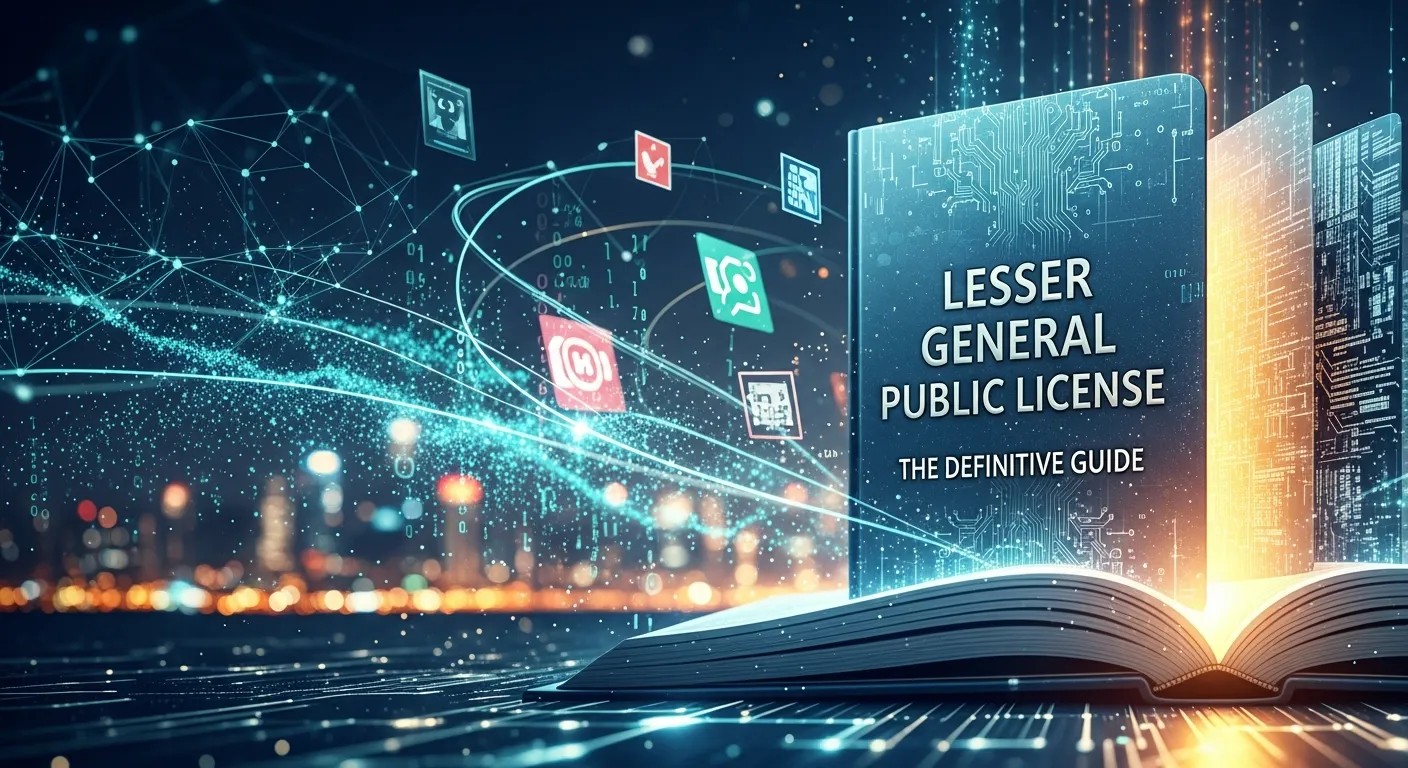
Lesser General Public License helps developers share code, protect core freedoms, and still allow proprietary linking. It sits between openness and business reality, making it essential for practical software strategy.
Lesser General Public License is often discussed with confusion, emotion, and half-truths. Some people treat it as a loophole. Others treat it like a legal trap. In reality, Lesser General Public License is a carefully designed permission system that balances freedom for users, flexibility for businesses, and protection for libraries. For anyone building software, publishing plugins, shipping SDKs, or managing licensing risk, understanding Lesser General Public License is not optional. It affects how code can be used, modified, linked, distributed, and supported over time.
The reason Lesser General Public License matters so much is simple: software is rarely built in isolation. Modern products depend on libraries, frameworks, helper modules, and shared components. When a developer chooses Lesser General Public License code, they are choosing a license model that encourages adoption without forcing every surrounding project to become open in the same way. That is why Lesser General Public License is often the preferred option for reusable libraries.
At the same time, Lesser General Public License creates responsibilities. If a team modifies the licensed library itself and distributes those modifications, obligations arise. If a company links against the library in a particular way, the technical architecture may affect legal outcomes. That is why a smart licensing strategy always includes careful review, documentation, and version control. Lesser General Public License is simple in spirit, but the details matter.
What the Lesser General Public License Actually Is
Lesser General Public License is a free software license designed mainly for libraries. It allows developers to use the library in proprietary or open-source projects while preserving user freedoms around the library itself. In practical terms, Lesser General Public License gives businesses room to build products without forcing their entire codebase into the same license.
This design makes Lesser General Public License different from stronger copyleft licenses. A classic GPL-style license can require derivative works to be distributed under the same terms. Lesser General Public License is more selective. It focuses the copyleft effect on the library and its modifications rather than automatically infecting every application that uses it.
That distinction is important for engineering teams, founders, and legal reviewers. Lesser General Public License often becomes the compromise that lets a high-quality component spread widely without losing its open-source identity. If the software world had to choose only between total permissiveness and total copyleft, many valuable libraries would never have been adopted at scale. Lesser General Public License solved that problem.
Why It Exists
Lesser General Public License was created to encourage library reuse. Libraries are different from end-user applications. A library is a building block. Developers should be able to use it in many environments, including proprietary systems, without fear that a small dependency choice will reshape the entire project’s legal structure. Lesser General Public License exists to keep that door open.
The philosophy behind Lesser General Public License is practical. Developers want freedom, but they also want compatibility. Businesses want legal certainty, but they also want access to reliable code. Open-source communities want widespread use, but they also want credit, transparency, and the right to keep improvements open. Lesser General Public License tries to satisfy all three goals at once.
For many organizations, this is the first license that feels realistic rather than ideological. Lesser General Public License does not demand that every surrounding product becomes open source. At the same time, it does not surrender the library into complete proprietary control. That balance is why it remains relevant.
How It Works in Practice
When software is released under Lesser General Public License, users receive the right to study, modify, and redistribute the licensed work under the stated conditions. The key question is whether the software is being used, modified, or redistributed in a way that triggers obligations. In most cases, Lesser General Public License focuses on the library itself and any changes made to it.
If you distribute a modified version of a Lesser General Public License library, you generally must provide the modified source under the same license. If you link an application to the library without modifying the library itself, the application may remain under different terms, depending on the linking method and the exact version of the license. This is where architecture matters. Dynamic linking, static linking, plugin systems, and distribution models can all affect the analysis.
That means compliance is not just a legal issue. It is also a build-pipeline issue, a release-process issue, and a documentation issue. Teams should know where the library comes from, whether it was modified, how it is linked, and what must be shipped with the final product. Lesser General Public License rewards teams that keep clean records.
Perplexity Rank Tracking Tools
A good way to understand Lesser General Public License is to look at what it protects. Users are not locked out of the source. They are not forced to accept a black box forever. They can inspect the library, improve it, and share those improvements according to the license terms. That is a meaningful freedom in a world where software controls communication, finance, productivity, and infrastructure.
Lesser General Public License also supports downstream innovation. A company can adopt a library without first negotiating a private license. A developer can test a component inside a commercial product. A startup can prototype faster because the legal path is already defined. That accessibility creates momentum, and momentum creates adoption.
However, Lesser General Public License is not a blank check. It protects freedom by attaching conditions. Those conditions are what keep the ecosystem healthy. Without them, the license would not preserve the same level of user protection. So the tradeoff is clear: freedom comes with responsibility, and responsibility comes with clarity.
The Main Compliance Rules
One of the most common mistakes is assuming that using Lesser General Public License code automatically makes every product open source. That is not accurate. The real compliance question is more specific: what was modified, what was distributed, and how was the library integrated?
If a team changes the library and ships it, source availability for those changes is usually required. If the team merely uses the library as intended, the compliance burden is usually lighter. If distribution occurs, notices, license text, and source access requirements may apply. That is why legal teams often work closely with engineering teams during release planning.
A robust compliance process should include license inventories, dependency tracking, attribution files, and release review steps. For companies shipping software across many platforms, this process should be standardized. Lesser General Public License becomes manageable when compliance is built into the workflow instead of added as an afterthought.
Common Mistakes to Avoid
First, do not assume that source code published somewhere “counts” if the distributed product does not clearly provide the required parts. Second, do not modify a library and forget to document the changes. Third, do not mix different license obligations without checking compatibility. Fourth, do not confuse a license notice with actual compliance. Fifth, do not treat Lesser General Public License as something to “hide” inside a product page. Transparency matters.
Companies often fail not because they intend to violate the license, but because they underestimate how distribution works. A private test environment is different from a shipped release. A demo is different from an installed product. A web app may raise different questions than a desktop binary. Lesser General Public License compliance is easier when the team understands these distinctions early.
Lesser General Public License vs GPL
Many people compare Lesser General Public License with GPL because they are related but not identical. The simplest way to think about it is this: GPL is more aggressive about sharing derivative works, while Lesser General Public License is more flexible for libraries and integration. That flexibility is the reason many teams choose it.
With GPL, linking can create strong obligations for the surrounding work. With Lesser General Public License, the intention is to permit broader adoption while still preserving freedom in the library itself. That difference can be decisive for commercial software teams. A startup may accept Lesser General Public License because it can keep its application model intact. The same startup may avoid GPL because the broader copyleft effect would be too restrictive.
This is not about one license being “good” and the other being “bad.” It is about fit. The right choice depends on the project’s goals, distribution model, and community strategy. In many product discussions, the answer comes down to this: do you want maximum propagation of the library, or maximum copyleft reach? Lesser General Public License usually chooses propagation.
Lesser General Public License and Proprietary Products
A large part of the confusion around Lesser General Public License comes from proprietary usage. Some people think proprietary software and open-source libraries cannot coexist. In reality, they often do. Companies integrate libraries into commercial products every day. The important issue is how they integrate them and what they distribute.
If your proprietary application uses a Lesser General Public License library in a permitted way, your application may remain proprietary. But if you alter the library and distribute that altered version, the license terms for the library changes still apply. That is why engineering teams should document dependency boundaries carefully.
This is also where product strategy matters. A company can save time by using a mature library rather than reinventing it. That saves development cost, improves reliability, and can accelerate launch timelines. But the legal team must still review the use case. Lesser General Public License allows business use, but it does not erase obligations.
The Role of Linking
Linking is one of the most discussed topics in any Lesser General Public License conversation. Why? Because the legal effect often depends on the technical structure. Static linking, dynamic linking, plugin loading, and service-based integration are not always treated the same way, and the interpretation may vary by jurisdiction, version, and factual context.
For developers, the key lesson is not to guess. Instead, map the architecture. Ask whether the library is included inside the shipped binary, loaded separately, or used through an interface that preserves separation. Ask whether the library is modified. Ask whether the final product is being distributed or merely used internally. Those details determine the real compliance path.
A careful team can often design around unnecessary risk simply by making technical boundaries clearer. Clear boundaries support cleaner compliance. Cleaner compliance reduces legal friction. And that makes Lesser General Public License easier to adopt in real projects.
Business Strategy and Adoption
From a business point of view, Lesser General Public License can be a powerful adoption tool. It lowers the entry barrier for companies that are reluctant to commit to stronger copyleft rules. That means more users, more testing, more feedback, and often more contributions. For the original authors, this can translate into community growth and reputation growth.
That means the license is not just a legal artifact. It is part of the brand. A clear Lesser General Public License policy can make a project feel dependable. A messy one can make even great software look risky. In a crowded software market, trust is a product feature.
Why Developers Prefer It
Developers often prefer Lesser General Public License because it reduces friction. They can use a library without turning every downstream project into a legal puzzle. They can keep their application architecture intact. They can ship faster. They can still contribute improvements back if they choose.
Another reason is ecosystem health. Libraries need adoption to matter. If the license is too restrictive, fewer people use the code. If fewer people use the code, fewer bugs are found and fewer improvements are shared. Lesser General Public License creates a middle path that often leads to wider real-world use.
For open-source maintainers, that wider use can be the difference between obscurity and relevance. For commercial developers, it can be the difference between a practical dependency and a licensing conflict. That is why Lesser General Public License remains a default choice for many reusable components.
How Companies Evaluate Risk
A company evaluating Lesser General Public License should ask four questions: Is the dependency a library or an embedded component? Is the library being modified? Is the software being distributed? Is the release process capable of proving compliance? Those four questions usually reveal the real risk profile.
Legal review should not happen in isolation. Engineers need to explain the dependency graph. Product managers need to explain the release plan. Legal teams need to explain the obligations. When all three groups work together, Lesser General Public License becomes predictable rather than scary.
Risk evaluation also benefits from internal policy. A dependency checklist, an approval process, and a source distribution plan can prevent last-minute panic. The earlier the review begins, the cheaper the compliance outcome usually is. That is true in most software licensing situations, but it is especially true with Lesser General Public License.
The Truth About “License Viruses”
People sometimes use the word “virus” to describe copyleft licenses. That language is usually emotional, not precise. Lesser General Public License is not a virus. It is a legal framework that asks for specific reciprocity in specific contexts. It is designed to protect the library and its users, not to secretly infect unrelated code.
The fear often comes from uncertainty. Teams hear about license obligations, but they do not know where the boundary lies. Once the boundary is understood, the fear usually drops. The real issue is not contamination. The real issue is compliance planning.
That is why education matters. When teams understand what triggers obligations, they stop overreacting and start planning. The result is better decisions. Lesser General Public License becomes a tool instead of a threat.
Libraries, Plugins, and Extensions
Lesser General Public License is especially relevant in ecosystems built on libraries, plugins, and extensions. A good library can support hundreds of products. A plugin system can allow commercial add-ons. An extension model can create a thriving marketplace. But all of this depends on clear licensing.
For example, many developers search for WordPress GPL Premium Themes and Plugins because they want affordable access to functionality and want to understand how licensing affects reuse. That same curiosity often leads to questions about library compatibility, distribution, and support obligations. The underlying lesson is the same: know what you are using, know what you are modifying, and know what you are shipping.
A healthy ecosystem is built on trust. When users know the license is clear, they are more willing to adopt the software. When maintainers know the rules are respected, they are more willing to keep improving it. Lesser General Public License helps create that stability.
Cost, Value, and Ownership
A good license does not just protect rights. It also affects cost structure. Teams that understand Lesser General Public License can make smarter build-versus-buy decisions. They can identify when a library saves money, when a commercial alternative is worth paying for, and when in-house development makes more sense.
This is where phrases like WordPress GPL Low Cost Site Building become relevant in broader market discussions. Many businesses are trying to reduce startup costs while still building legitimate, sustainable products. Licensing awareness helps them make informed decisions instead of reactive ones.
Ownership also matters psychologically. When teams know what they own, what they depend on, and what they must disclose, they feel more in control. Uncertainty drives fear. Clarity drives action. Lesser General Public License offers a structure that can reduce uncertainty when handled properly.
Legal Truth, Not Marketing Noise
There is a lot of marketing noise around software licensing. Some people exaggerate the risks. Some people minimize them. Some people sell easy answers. The best approach is to separate opinion from legal reality. That is the WordPress GPL Legal Truth principle in practice: read the license, understand the architecture, and do not rely on slogans.
The same standard applies across the open-source world. A license is not a branding tool. It is a permission document. That means product teams need accurate information, not hype. The more transparent the project, the easier it is to build trust with users, customers, and partners.
When the legal truth is ignored, problems appear later. When it is respected early, teams can move faster with less fear. Lesser General Public License rewards organizations that approach compliance honestly.
Why Nulled Software Is a Different Conversation
A license discussion should never be confused with piracy. GPL vs Nulled is not a fair comparison because one is a legal licensing framework and the other usually refers to unauthorized, modified, or stolen software copies. That distinction matters. The issue is not merely technical. It is ethical, legal, and reputational.
Teams that want sustainable software should avoid confusion between licensed redistribution and unauthorized copying. A company that builds on legitimate open-source components can create a strong foundation. A company that relies on unauthorized copies takes unnecessary risk. Reputation damage can be harder to fix than legal damage.
That is why the conversation about Lesser General Public License should stay grounded. The license is about lawful use under defined terms. Nulled software is about bypassing those terms. They are not the same, and professionals should treat them differently.
Site Performance and Maintenance
Licensing decisions also affect maintenance workflows. A project that uses open-source libraries must keep dependencies healthy, update regularly, and manage performance. For example, a team might use a WordPress Cache Plugin to improve response times, then pair it with a Database Cleaner Plugin to remove unused data and reduce overhead. These operational choices sit alongside licensing choices in the same product lifecycle.
When teams ignore maintenance, they create slow systems and support headaches. When they ignore licensing, they create legal headaches. The best teams treat both as part of quality engineering. Performance, security, and compliance all reinforce one another.
Lesser General Public License fits into this picture because it encourages responsible reuse. Good libraries are easier to maintain when communities can inspect, improve, and redistribute them under clear rules.
Myths That Still Circulate
One myth says Lesser General Public License is only for hobby projects. That is false. Large companies use LGPL-covered components in serious systems all the time. Another myth says it is too risky for business. That is also too broad. Risk depends on the architecture and compliance process, not on the license alone.
A third myth says all copyleft is the same. Not true. Different licenses impose different conditions in different ways. A fourth myth says the license text is too complex for normal teams. In practice, most teams do not need to memorize every clause. They need a workflow that flags questions early.
Myths persist because people repeat them without context. Once a team learns the real rules, it can make calmer and better decisions. Lesser General Public License is demanding in some areas, but it is not mysterious.
A Practical Decision Framework
If you are deciding whether to adopt Lesser General Public License code, start with purpose. Is the component central to your product, or just a supporting dependency? Then evaluate modification risk. Will your team need to change the library itself? Next, evaluate distribution. Will customers receive the software or only access it as a service? Finally, review your documentation. Can you prove compliance if asked?
This framework keeps the decision grounded. It avoids panic, and it avoids wishful thinking. It also helps non-lawyers speak clearly with legal counsel. When everyone understands the same facts, decisions happen faster.
For many teams, the answer will be yes, because the benefits outweigh the obligations. For others, a different license may be a better fit. The important part is that the choice is deliberate. Lesser General Public License should be selected with intention, not accident.
How to Build an Internal Policy
A company that uses open-source software should write down its rules. The policy should explain what licenses are allowed, who approves exceptions, how source distribution is handled, and where notices are stored. It should also explain how dependencies are reviewed before release.
Good policy reduces fear. It also reduces personality-driven decision making. One engineer should not have to improvise a legal answer at the last minute. The organization should already know the process. That is how mature teams operate.
A small startup can keep the policy light. A larger company may need multiple review gates. Either way, the policy should be clear enough that a new engineer can understand it. Lesser General Public License becomes much easier when the company treats license management as a normal part of engineering hygiene.
Why This Matters for Reputation
Open-source reputation is often built over years, but it can be damaged quickly. If a project is clear, fair, and responsive, people trust it. If a project seems to hide source obligations, users become suspicious. That is where Online Reputation Management enters the conversation again.
A project that respects its licensing obligations tends to earn goodwill. A project that ignores them may face public criticism, user confusion, or contributor reluctance. Transparency is powerful because it reduces perceived risk. And in software, perceived risk can be as damaging as actual bugs.
This is why Lesser General Public License should be viewed not only as a legal framework but also as a trust signal. The way a team handles it says a lot about the team itself.
Common Scenarios Where Teams Get Stuck
Teams often get stuck in the same places. They are unsure whether a plugin counts as a separate work. They are unsure whether internal use counts as distribution. They are unsure whether modified source must be published with the binary. They are unsure whether notices need to be included in documentation. These are all normal questions.
The right response is not guesswork. It is process. Review the distribution model. Identify the exact artifact being shipped. Check what is modified. Confirm what license text accompanies the release. If needed, get legal advice before shipping. Lesser General Public License becomes manageable once these steps become routine.
The biggest mistake is assuming that a small project does not need formal review. Even small projects can create large problems if they scale. Licensing issues do not disappear because the team is small.
When Lesser General Public License Is the Right Choice
Lesser General Public License is often the right choice when the goal is broad adoption of a reusable library. It is also strong when the author wants to preserve openness without blocking proprietary integration. It works well when the project’s value increases as more developers can safely depend on it.
It is less ideal when the goal is to force all derivative works into the same open model. It is also less ideal when the team wants maximum simplicity with no copyleft conditions at all. In those cases, another license may fit better.
But for libraries, frameworks, and modular components, Lesser General Public License often hits the sweet spot. That is why it keeps appearing in real-world engineering conversations, from startups to enterprise software teams.
Final Takeaway
The best way to understand Lesser General Public License is to see it as a balance: openness with boundaries, adoption with obligations, and freedom with structure. That balance is what makes it durable. The license is not trying to satisfy everyone in the abstract. It is trying to make practical software collaboration possible.
When teams understand the technical and legal boundary lines, they can use the license confidently. When they ignore those boundary lines, confusion follows. The good news is that the rules can be learned, documented, and applied consistently. Once that happens, Lesser General Public License becomes a very useful part of the software toolkit.
Conclusion
Lesser General Public License is valuable because it bridges two worlds: the collaborative spirit of open source and the operational reality of modern software business. It gives authors a way to protect shared improvements while still allowing broad use in real products. It gives companies a path to adopt proven libraries without automatically opening their entire codebase. It also gives users meaningful rights to inspect, modify, and redistribute the covered software. The smartest teams treat Lesser General Public License as a strategic decision, not a legal afterthought. With good documentation, clear architecture, and careful release management, it can support trust, growth, and long-term sustainability.
Frequently Asked questions (FAQ)
What is the Lesser General Public License in simple terms?
It is a free software license that lets people use a library in many kinds of projects while keeping certain freedoms around the library itself.
Is Lesser General Public License good for commercial software?
Yes, in many cases it is. Commercial teams often use it for libraries because it can allow proprietary applications while still preserving the license terms on the library.
Does Lesser General Public License force my whole app to be open source?
Not usually. The obligations generally focus on the licensed library and its modifications, not automatically on every unrelated part of the application.
What is the biggest compliance mistake?
The biggest mistake is assuming that integration has no legal consequences. Teams should always check whether they modified the library, distributed it, or changed the linking model.
Is Lesser General Public License the same as GPL?
No. They are related, but Lesser General Public License is more flexible for library use and usually less restrictive for surrounding applications.
Can I use Lesser General Public License code in a paid product?
Often yes, depending on the exact use case and compliance requirements. The fact that a product is paid does not automatically prevent use.
What should be included when distributing software under this license?
Usually the license text, proper notices, and the required source for any covered modifications or covered components being distributed.
Why do developers like this license?
Because it balances openness and practicality. It lets them reuse good libraries without forcing the entire project into a stronger copyleft model.
What should a company do before shipping?
It should review dependencies, confirm the distribution model, document modifications, and make sure notices and source obligations are handled correctly.
Is legal review necessary?
For serious products, yes. A short review can prevent major problems later, especially when the software is distributed at scale.