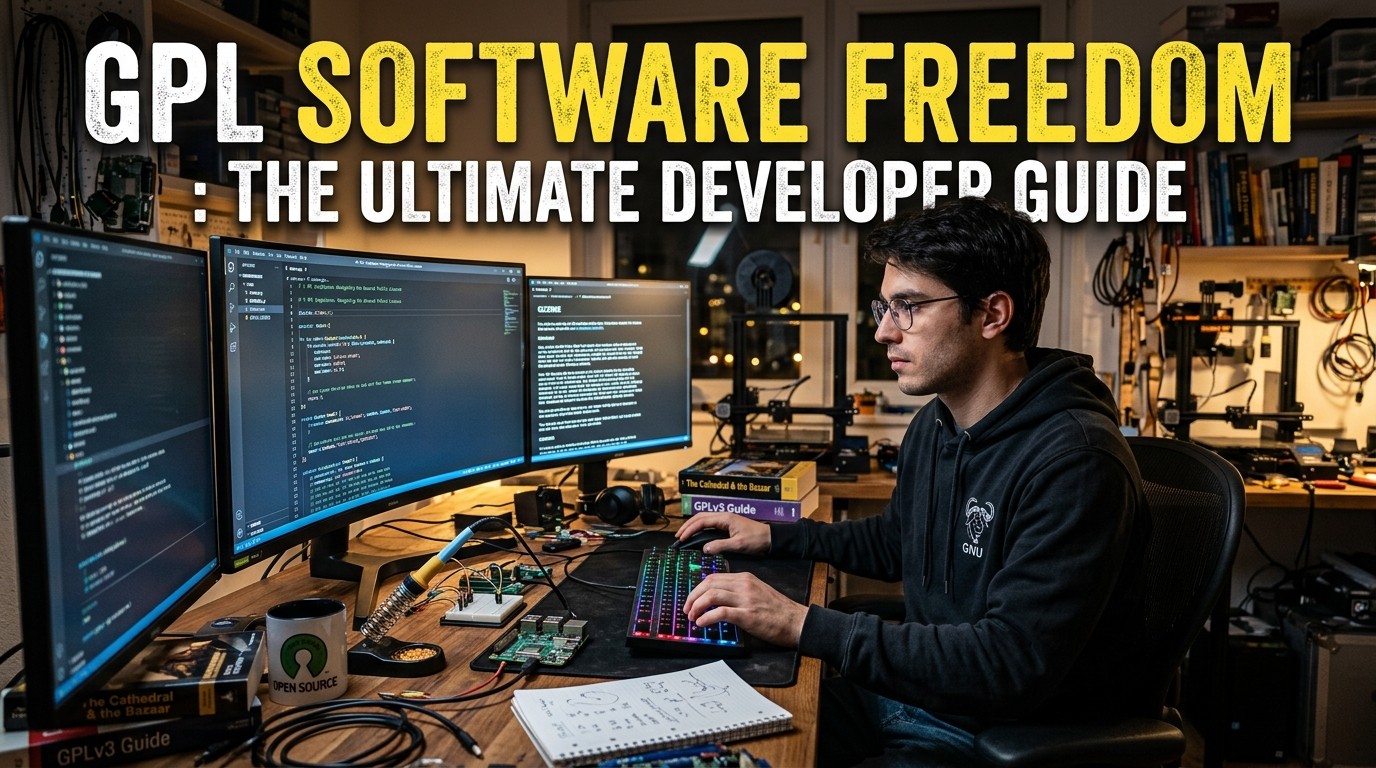
GPL Software Freedom empowers developers to use, modify, and distribute software openly while protecting user rights, collaboration, innovation, transparency, security, and long-term sustainability in modern software ecosystems.
In today’s rapidly evolving digital ecosystem, developers are constantly searching for software models that encourage innovation without sacrificing ownership rights or collaborative growth. One of the most powerful concepts supporting this vision is GPL Software Freedom. Whether you are an independent programmer, startup founder, open-source contributor, or enterprise developer, understanding GPL Software Freedom can transform the way you build and distribute software.
The rise of open-source technologies has made GPL Software Freedom more important than ever before. From operating systems and development frameworks to enterprise tools and cloud infrastructure, open-source software powers a massive portion of the internet. Developers now rely on transparent, community-driven software environments where sharing improvements and protecting user freedoms create stronger digital ecosystems.
At its core, GPL Software Freedom ensures that users can access source code, modify applications, share improvements, and continue innovation without restrictive licensing barriers. This approach creates an environment where software evolves faster, security vulnerabilities are identified quickly, and developers gain more control over their projects.
Understanding GPL Software is not only valuable for legal compliance but also essential for building trust with users and contributors. Many successful technology companies have embraced GPL-based ecosystems because open collaboration often produces better and more secure products.
This guide will explore everything developers need to know about GPL Software, including its history, benefits, licensing structure, legal implications, commercial use cases, challenges, misconceptions, and best practices.
What Is GPL Software Freedom?
GPL Software Freedom refers to the rights granted to users and developers under the GNU General Public License, commonly known as GPL. The license was created to ensure that software remains free for users to study, modify, distribute, and improve.
Unlike proprietary software models that restrict access to source code, GPL Software guarantees transparency and collaboration. Developers can inspect how software works internally, customize features, fix bugs, and redistribute improved versions.
The foundation of GPL Software is built around four essential freedoms:
- Freedom to run the software for any purpose.
- Freedom to study how the software works.
- Freedom to modify the software.
- Freedom to redistribute copies and improvements.
These freedoms protect both users and developers from restrictive corporate control. Instead of locking innovation behind private ownership, GPL Software Freedom encourages a cooperative development environment.
One of the key reasons why GPL Software became globally influential is its “copyleft” principle. Copyleft ensures that modified versions of GPL-licensed software must also remain open and accessible under the same license terms.
The History Behind GPL Software

The story of GPL Software Freedom begins with the Free Software Movement founded by Richard Stallman during the 1980s. At that time, software companies increasingly restricted access to source code, making it difficult for programmers to collaborate freely.
Richard Stallman believed software should remain open for learning, sharing, and innovation. To protect these principles, he launched the GNU Project and later introduced the GNU GPL License.
The creation of the GNU GPL License became one of the most important milestones in software history. It legally protected the rights associated with GPL Software Freedom while ensuring future software modifications also preserved those freedoms.
Over time, GPL Software expanded far beyond small developer communities. Major projects like the Linux kernel, GNU utilities, and numerous development tools adopted GPL licensing.
Today, GPL Software influences countless industries including:
- Web development
- Cybersecurity
- Artificial intelligence
- Cloud computing
- Mobile applications
- Enterprise infrastructure
- Educational technology
The impact of GPL Software Freedom continues to grow as businesses increasingly recognize the advantages of collaborative innovation.
Why GPL Software Matters Today
Modern developers face multiple challenges including vendor lock-in, expensive licensing costs, limited customization, and security transparency issues. GPL Software Freedom helps solve many of these problems.
Encourages Innovation
One of the greatest strengths of GPL Software is the speed of innovation. Open collaboration allows developers worldwide to contribute improvements, bug fixes, and new features.
Instead of depending solely on a single company’s development team, projects powered by GPL Software Freedom benefit from global expertise.
Improves Security
Security through transparency is another major advantage. Because source code remains publicly accessible, vulnerabilities can be identified and fixed faster.
Many cybersecurity professionals prefer environments built around GPL Software because hidden malicious code becomes much harder to conceal.
Reduces Development Costs
Businesses can significantly lower software costs by using GPL Software projects. Organizations avoid expensive proprietary licensing fees while gaining flexibility to customize applications.
Startups especially benefit from GPL Software because they can scale products without massive upfront software investments.
Prevents Vendor Lock-In
Vendor lock-in occurs when businesses become dependent on proprietary systems they cannot fully control. GPL Software prevents this issue by ensuring continued access to source code.
Companies maintain the ability to modify and migrate systems according to evolving business requirements.
Core Principles of GPL Software
Understanding the principles behind GPL Software helps developers use open-source software responsibly.
Transparency
Transparency means users can inspect how software functions internally. This principle increases trust and accountability.
GPL Software promotes transparent development practices where code reviews and community oversight strengthen software quality.
Collaboration
Open collaboration allows developers from different backgrounds to contribute knowledge and expertise.
Communities built around GPL Software often evolve faster because contributors continuously improve software functionality.
Equal Access
Equal access ensures anyone can use the software regardless of geographic location, company size, or financial resources.
GPL Software creates opportunities for students, independent developers, nonprofits, and startups.
Long-Term Sustainability
Because source code remains accessible, projects can survive even if original maintainers leave.
GPL Software reduces the risk of software abandonment and protects long-term accessibility.
Understanding Copyleft in GPL Software
Copyleft is one of the defining features of GPL Software. Unlike permissive licenses, copyleft requires derivative works to remain under the same licensing terms.
This means developers who modify GPL-licensed software must also share their modified source code when distributing the software.
The copyleft mechanism preserves GPL Software across future generations of software development.
Advantages of Copyleft
- Prevents closed-source exploitation
- Encourages community contribution
- Protects software openness
- Maintains long-term accessibility
- Promotes ethical collaboration
Challenges of Copyleft
Although GPL Software provides significant benefits, some businesses hesitate because copyleft obligations may conflict with proprietary business models.
Organizations must understand compliance requirements carefully before integrating GPL software into commercial products.
GPL Versions Explained
Several versions of GPL Software licensing exist, each improving upon previous versions.
GPL Version 1
Released in 1989, GPL v1 established the foundation of GPL Software Freedom. It focused on preventing restrictions that blocked software sharing.
GPL Version 2
GPL v2 became extremely popular and remains widely used today. The Linux kernel famously operates under GPL v2.
GPL Software Freedom under version 2 strengthened copyleft protections and clarified redistribution requirements.
GPL Version 3
GPL v3 introduced protections against modern threats including patent aggression and hardware restrictions.
Many developers consider GPL v3 an important evolution of GPL Software Freedom because it addresses challenges introduced by cloud computing and digital rights management.
Commercial Use of GPL Software Freedom
A common misconception is that GPL Software Freedom prevents commercial activity. In reality, businesses can legally sell GPL-licensed software.
Companies may charge for:
- Software distribution
- Technical support
- Hosting services
- Customization
- Consulting
- Enterprise deployment
However, distributed software must still comply with GPL requirements.
Many successful businesses built profitable ecosystems around GPL Software Freedom by combining open-source software with premium services.
Examples include:
- Enterprise Linux support providers
- Open-source cloud platforms
- Development tool vendors
- Security service companies
The success of these models proves GPL Software Freedom and commercial profitability can coexist.
GPL Software Freedom in Web Development
Web development heavily depends on GPL Software Freedom technologies.
Popular content management systems, frameworks, and server technologies often operate under GPL licensing.
Developers benefit from:
- Flexible customization
- Large support communities
- Lower infrastructure costs
- Rapid feature development
- Extensive plugin ecosystems
While building websites, some developers integrate tools like an Internal Link Builder Plugin to improve SEO structures and navigation efficiency.
Similarly, many websites enhance search visibility using a Schema Markup Plugin for structured data optimization.
These ecosystems thrive partly because GPL Software Freedom encourages extensive plugin development and collaborative enhancement.
The Relationship Between Linux and GPL Software Freedom
The Linux ecosystem represents one of the greatest success stories of GPL Software Freedom.
Linux powers:
- Servers
- Supercomputers
- Android devices
- Cloud platforms
- Embedded systems
- IoT infrastructure
Because Linux operates under GPL licensing, developers worldwide continuously improve performance, security, and scalability.
Without GPL Software Freedom, Linux may never have evolved into today’s dominant infrastructure platform.
The collaborative model demonstrated how global communities could build enterprise-grade technology together.
GPL Software Freedom and Cybersecurity
Cybersecurity professionals frequently support GPL Software Freedom because transparent systems improve auditability.
Open-source security tools allow experts to inspect code directly instead of blindly trusting vendors.
Benefits include:
- Faster vulnerability detection
- Independent verification
- Transparent encryption implementations
- Community-driven security patches
- Reduced hidden backdoors
Many penetration testing and network analysis tools depend on GPL Software Freedom principles.
Educational Benefits of GPL Software Freedom

Students and new developers gain enormous educational advantages from GPL Software Freedom.
Access to real-world source code provides hands-on learning opportunities impossible in closed-source environments.
Developers can:
- Study advanced programming techniques
- Learn architecture design
- Contribute to production projects
- Improve debugging skills
- Build professional portfolios
Universities frequently incorporate GPL Software Freedom projects into computer science curricula.
GPL Software Freedom vs Proprietary Software
Understanding the difference between GPL Software Freedom and proprietary software helps developers choose the right licensing approach.
| Feature | GPL Software Freedom | Proprietary Software |
|---|---|---|
| Source Code Access | Open | Restricted |
| Modification Rights | Allowed | Limited |
| Redistribution | Permitted | Usually Restricted |
| Transparency | High | Low |
| Vendor Lock-In | Minimal | Common |
| Community Collaboration | Strong | Limited |
| Customization | Extensive | Often Restricted |
| Licensing Costs | Usually Lower | Often Expensive |
Although proprietary software may provide centralized support, GPL Software Freedom offers flexibility and long-term control.
Legal Considerations in GPL Software Freedom
Legal understanding is essential when using GPL Software Freedom in professional environments.
Distribution Obligations
If distributing GPL software binaries, corresponding source code must also be accessible.
Derivative Works
Modified versions distributed publicly generally inherit GPL obligations.
License Compatibility
Not all open-source licenses are fully compatible with GPL Software Freedom requirements.
Organizations should consult legal professionals when integrating multiple open-source components.
GPL Software Freedom in Enterprise Environments
Large enterprises increasingly adopt GPL Software Freedom technologies for scalability and cost efficiency.
Advantages include:
- Infrastructure flexibility
- Reduced vendor dependency
- Faster innovation cycles
- Enhanced security transparency
- Strong developer communities
Enterprise adoption demonstrates that GPL Software Freedom can support mission-critical operations.
Cloud computing providers, financial institutions, and global technology companies rely heavily on open-source infrastructure.
Community Culture Around GPL Software Freedom
One reason GPL Software Freedom remains influential is its strong community culture.
Open-source communities encourage:
- Knowledge sharing
- Peer review
- Ethical collaboration
- Mentorship
- Global participation
Contributors often develop valuable professional networks through GPL Software Freedom projects.
Many developers build reputations and career opportunities through consistent community involvement.
Fragmentation
Too many competing forks may divide development resources.
Even with these challenges, GPL Software Freedom continues to evolve and adapt.
Best Tools and Platforms Supporting GPL Software Freedom
Many development tools support ecosystems built around GPL Software Freedom.
Popular examples include:
- Linux distributions
- GNU development utilities
- Git version control systems
- Open-source databases
- Web servers
- Programming frameworks
Some developers also use tools associated with GPL Ghost Script for document rendering and PDF processing workflows.
These technologies demonstrate the broad influence of GPL Software Freedom across multiple industries.
How Developers Can Contribute to GPL Software Freedom
Contributing to GPL Software Freedom projects does not always require advanced coding expertise.
Developers can contribute through:
- Bug reporting
- Documentation writing
- Translation
- UI improvements
- Testing
- Security auditing
- Feature development
- Community support
Even small contributions help strengthen GPL Software Freedom ecosystems.
Open-source participation also improves career growth by showcasing real-world experience.
Future of GPL Software Freedom
The future of GPL Software Freedom looks increasingly promising.
As organizations prioritize transparency, security, interoperability, and innovation, open-source ecosystems continue expanding.
Emerging technologies benefiting from GPL Software Freedom include:
- Artificial intelligence
- Blockchain systems
- Edge computing
- Quantum research
- Privacy-focused applications
- Decentralized infrastructure
Developers increasingly recognize that collaborative ecosystems often outperform isolated proprietary environments.
The principles behind GPL Software remain highly relevant in a digital world demanding openness and accountability.
Why Developers Should Care About GPL Software
Every developer eventually encounters licensing decisions.
Understanding GPL Software helps professionals:
- Avoid legal mistakes
- Build ethical software ecosystems
- Collaborate effectively
- Reduce development costs
- Improve software quality
- Gain community trust
- Increase technical flexibility
Whether building personal projects or enterprise platforms, knowledge of GPL Software provides long-term strategic advantages.
The Ethical Side of GPL Software Freedom

Beyond technical and legal advantages, GPL Software also represents an ethical philosophy.
The movement promotes fairness, equal access, and collaborative progress.
Instead of restricting knowledge behind corporate barriers, GPL Software encourages global participation in technological advancement.
This philosophy empowers developers in developing regions, educational institutions, nonprofit organizations, and independent communities.
Technology becomes more accessible when users maintain the right to study, improve, and share software freely.
How GPL Software Builds Developer Trus
One of the biggest advantages of GPL Software is the level of trust it creates between developers, businesses, and end users. In proprietary ecosystems, users often have no visibility into how software operates internally. This lack of transparency can create concerns regarding privacy, security, hidden tracking systems, or long-term reliability. GPL Software solves this problem by allowing public access to source code, enabling developers to verify functionality independently. Open collaboration also encourages faster bug fixes, security improvements, and feature innovation because contributors worldwide participate in the development process. As communities grow around open-source ecosystems, users become more confident about software sustainability and long-term accessibility. Businesses adopting GPL Software often gain stronger credibility among technical audiences because transparency demonstrates accountability, ethical development practices, and commitment to user empowerment instead of restrictive vendor control.
Conclusion
GPL Software Freedom continues to shape the modern software industry by protecting transparency, collaboration, innovation, and user rights. From Linux infrastructure and enterprise systems to educational projects and cybersecurity tools, its impact reaches nearly every corner of technology. Developers who understand GPL Software Freedom gain the ability to build flexible, sustainable, and ethically responsible software ecosystems. As open-source adoption accelerates worldwide, mastering GPL licensing principles becomes increasingly valuable for businesses, independent programmers, and technology leaders. By embracing GPL Software Freedom, developers contribute to a future where knowledge sharing, community collaboration, and accessible innovation remain central to digital progress.
Frequently Asked Questions (FAQ)
1. What does GPL stand for?
GPL stands for General Public License, a widely used open-source software license.
2. Is GPL Software only for programmers?
No, businesses, educators, students, and organizations also benefit from GPL Software.
3. Can companies make money using GPL software?
Yes, companies can sell services, support, hosting, and customization around GPL software.
4. Does GPL Software allow software modification?
Yes, users can legally modify GPL-licensed software.
5. Is Linux connected to GPL licensing?
Yes, the Linux kernel is distributed under GPL licensing.
6. What is copyleft in GPL?
Copyleft ensures modified software versions remain open under the same license.
7. Is GPL Software good for startups?
Yes, startups often reduce costs and gain flexibility using GPL technologies.
8. Can GPL software improve cybersecurity?
Yes, transparent source code enables faster vulnerability detection and auditing.
9. Why is open-source collaboration important?
Collaboration accelerates innovation, improves software quality, and strengthens communities.
10. What is the future of GPL Software?
The future appears strong as industries increasingly adopt open-source infrastructure and collaborative development models.